Kidney stones are a common urinary problem that can cause intense pain, discomfort, and difficulty while passing urine. They develop when certain minerals and salts in the urine become concentrated and form hard crystals. Although kidney stones can vary in size and type, many people can reduce their risk by making healthy lifestyle changes and following appropriate medical advice.
Homeopathy is often explored as a complementary approach for people looking for personalized healthcare. However, kidney stones may sometimes require medical evaluation, imaging, medication, or procedures. Understanding the causes and taking preventive steps is therefore important for maintaining healthy kidneys and reducing the chance of recurrence.
What Causes Kidney Stones?
Kidney stones can develop when substances such as calcium, oxalate, uric acid, or other minerals become highly concentrated in urine. Not drinking enough water is one of the most common contributing factors.
Other factors may include a family history of kidney stones, certain dietary habits, obesity, some medical conditions, and particular medications. People who have experienced kidney stones previously may also have a higher chance of developing them again.
Knowing the possible cause of a stone can help a healthcare professional recommend suitable preventive measures.
Stay Well Hydrated Every Day
Instead of waiting until you feel thirsty, make water a regular part of your daily routine. Your fluid requirements can vary depending on your activity level, weather, diet, and health condition.
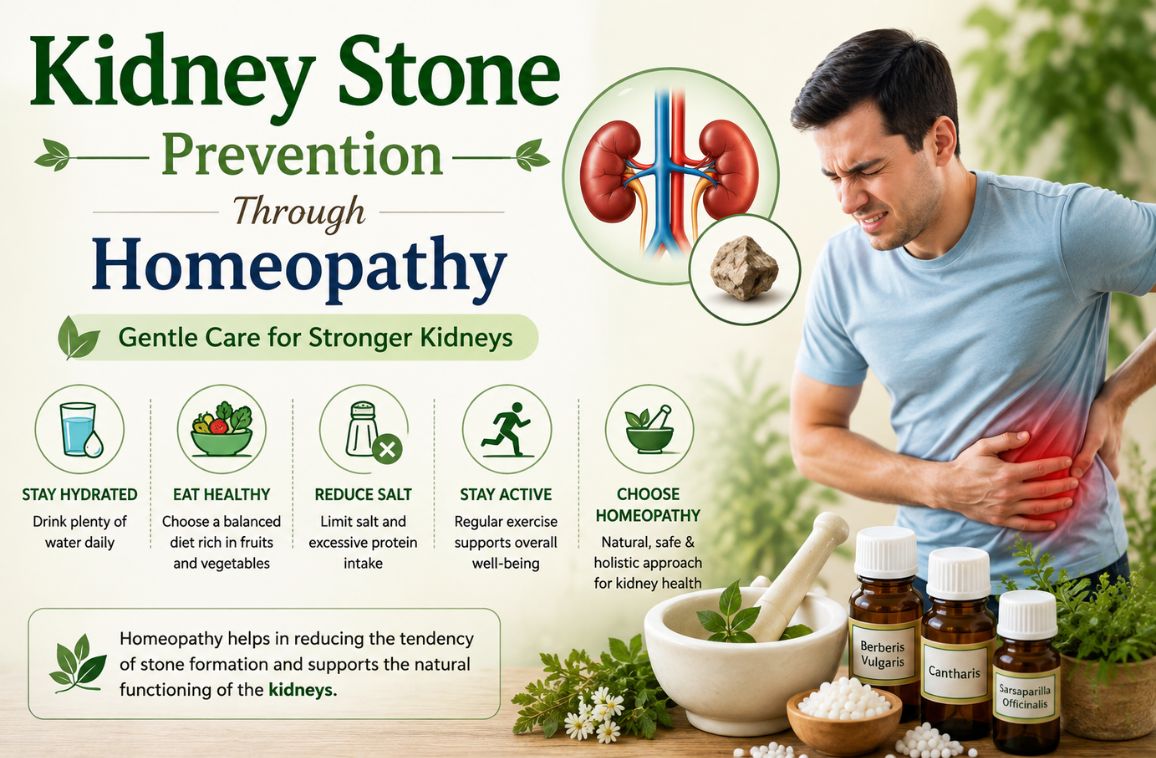
Adequate hydration is one of the most important steps for kidney stone prevention. Drinking enough water helps dilute substances in the urine that can form crystals.
People who have been advised to restrict fluids because of another medical condition should follow their doctor’s recommendations rather than increasing fluid intake on their own.
Make Balanced Food Choices
Diet can play an important role in reducing the risk of recurring stones. A balanced diet with appropriate amounts of fruits, vegetables, whole grains, and other nutritious foods can support overall health.
Excessive salt intake may increase the amount of calcium released into urine in some people. Therefore, reducing highly salty processed foods can be beneficial.
It is also important not to make extreme dietary changes without professional guidance. The right dietary approach depends partly on the type of kidney stone a person has experienced.
How Homeopathy May Be Considered
People searching for homeopathy for kidney stones in hyderabad may be interested in individualized care. Homeopathic practitioners typically consider a person’s symptoms, general health, lifestyle, and other individual factors when developing an approach.
However, homeopathy should not be considered a replacement for necessary medical evaluation. A kidney stone that blocks urine flow, causes severe symptoms, or is associated with infection can require urgent conventional medical treatment.
For anyone considering complementary care, discussing the approach with a qualified healthcare professional can help ensure that important medical treatment is not delayed.
Recognizing Symptoms Early
Small kidney stones may sometimes pass without causing noticeable symptoms. Larger stones can cause severe pain, particularly in the side or back, and the discomfort may move toward the lower abdomen or groin.
Some people may also experience painful urination, frequent urination, nausea, vomiting, or blood in the urine.
Symptoms can vary from person to person. If symptoms appear suddenly or become severe, medical assessment is important.
When to Seek Medical Attention
Certain symptoms should never be ignored. Severe or persistent pain, fever, chills, vomiting, difficulty passing urine, or blood in the urine may require prompt medical evaluation.

An infection combined with an obstructed urinary tract can become serious. Therefore, relying only on home remedies or delaying professional care is not advisable when warning signs are present.
A doctor may recommend urine tests, blood tests, ultrasound, CT imaging, or other investigations depending on the symptoms and suspected stone.
Personalized Care and Prevention
Preventing kidney stones is not simply about taking a particular remedy. Long-term prevention involves understanding why stones formed in the first place.
A healthcare professional may recommend analyzing a passed stone or performing additional tests to identify its composition. This information can help guide dietary and lifestyle recommendations.
For those exploring complementary healthcare, clinics such as STAR Homeopathy may provide individualized consultations. Patients should clearly discuss any existing treatments, medicines, and medical conditions with their healthcare providers.
Simple Habits That Can Help
A few everyday habits can support urinary health and general well-being:
- Drink adequate water throughout the day.
- Limit excessive salt and highly processed foods.
- Maintain a healthy body weight.
- Follow dietary recommendations based on your stone type.
- Stay physically active according to your ability.
- Attend follow-up appointments if you have previously had stones.
- Take prescribed medicines exactly as directed.
- Do not ignore persistent urinary symptoms.
These habits can be useful alongside professional medical guidance and may help lower the risk of future problems.
The Importance of Individual Guidance
There is no single approach that works for everyone with kidney stones. Stone type, size, location, symptoms, medical history, and lifestyle can all influence treatment and prevention.
Anyone looking for natural kidney stone prevention should focus first on safe hydration, balanced nutrition, appropriate medical evaluation, and personalized guidance. Complementary approaches should be discussed with qualified professionals, especially when symptoms are significant.
Conclusion
Kidney stone prevention begins with understanding your individual risk factors and making sustainable lifestyle choices. Staying adequately hydrated, eating a balanced diet, limiting excessive salt, maintaining a healthy weight, and following medical advice can all contribute to better urinary health.
Homeopathy may be considered by some people as a complementary healthcare option, but it should not replace necessary diagnosis or treatment. If you have recurring stones or concerning symptoms, seek professional medical guidance to determine the safest and most effective approach.
With informed choices, regular care, and attention to early warning signs, you can take meaningful steps toward protecting your kidney health and reducing the likelihood of future kidney stone problems.