
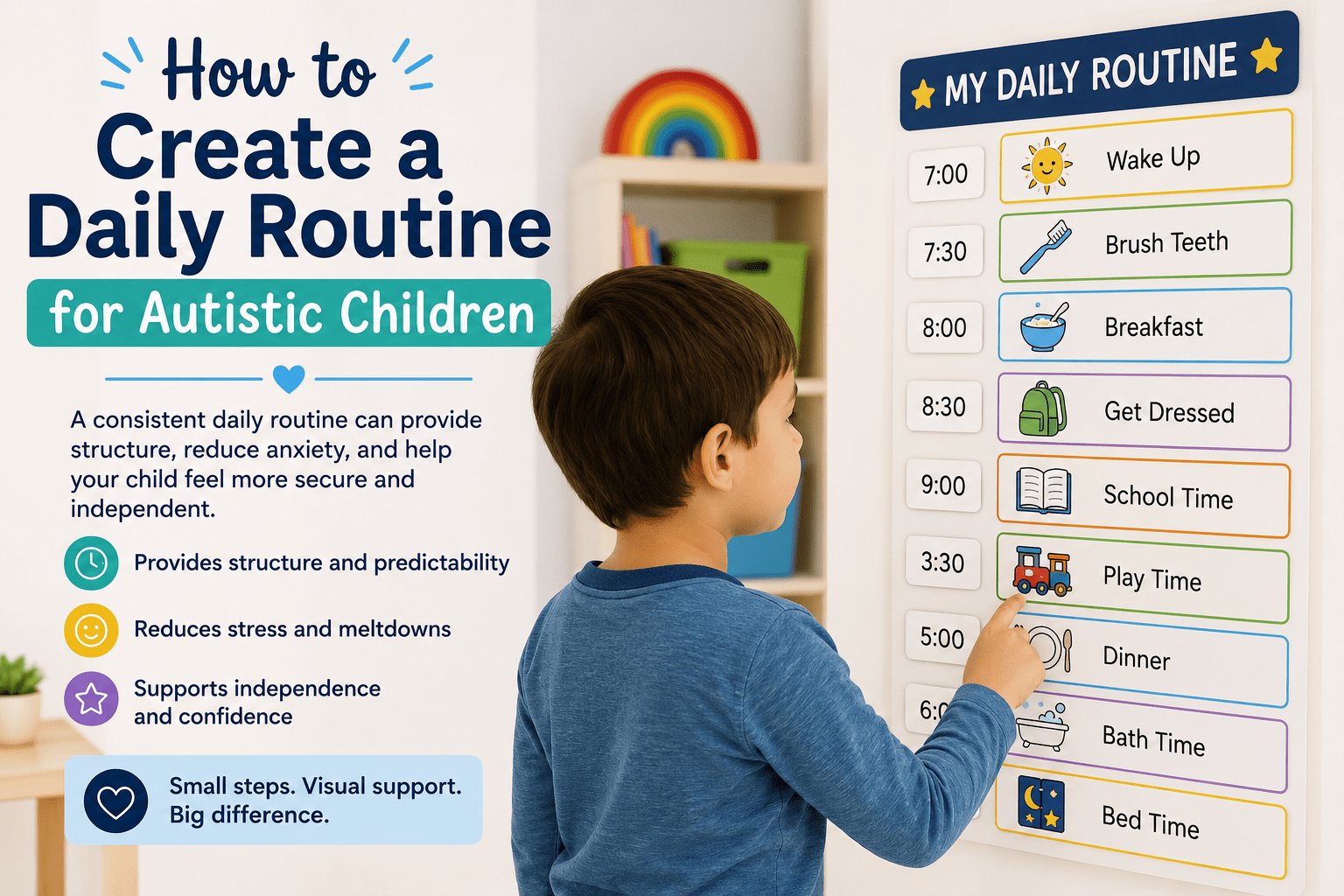
Many autistic children feel that the world around them is unpredictable. Sudden changes, rushed mornings, loud sounds, or unexpected plans can feel overwhelming. A clear daily routine for autistic children brings comfort and stability. When a child knows what is happening next, the day feels safer and easier to manage.
A well-planned routine for an autistic child is not about strict rules. It is about creating a calm structure that reduces stress and supports emotional balance.
Importance of a Daily Routine for Children with Autism
Many children with Autism often process information differently. Uncertainty or sudden changes can lead to stress, sensory overload, or behavioural challenges. A consistent daily schedule for autism helps in many ways:
• Reduces anxiety caused by unpredictability
• Makes transitions smoother
• Encourages independence
• Supports emotional regulation
• Builds a sense of security
When expectations are clear, children can relax into their day instead of worrying about what might happen next.
Sample Daily Routine For Autistic Children
A supportive routine usually includes waking up and sleeping around the same time, regular meals and snacks, familiar activity blocks, clear signals before transitions, and time to rest and recover from sensory overload. Every child is different. Use this only as a reference, not a checklist.
| Morning | Midday | Afternoon | Evening | Dinner |
|---|---|---|---|---|
|
Wake up gently at the same time each day.
Personal care with support as needed. Breakfast Calm transition to school or learning activity |
Structured learning or activity time
Snack break Movement or outdoor play |
Lunch
Quiet time or rest Sensory-friendly or creative play |
Family time or light play |
Wind-down routine (bath, stories, calm activities)
Bedtime at a predictable hour |
This daily routine for children with autism is only a guide, not a checklist. Every child is different. Adjust based on your child’s comfort and energy levels.
How Parents Can Maintain Routine Without Pressure
Many parents feel stressed when routines do not go as planned. That is completely normal. A routine should support your child, not exhaust you.
• Introduce changes slowly
• Prepare your child in advance
• Use simple language and visual cues
• Allow flexibility within structure
• Observe what works best
Consistency matters, but perfection is not required.
Common Challenges and How to Handle Them
Transitions can sometimes be difficult. Small tools can make a big difference:
• Use countdowns or visual timers
• Give verbal reminders before switching activities
• Introduce one consistent habit at a time
• Explain changes in advance
• Return to the usual routine as soon as possible
Familiarity builds comfort over time. A sustainable routine for autistic kids supports the entire family.
Signs Your Autistic Child May Benefit From a Daily Routine
Every child is different, but some behaviours can gently signal that your child may feel discomfort due to too much unpredictability. A simple, consistent routine can often bring noticeable relief.
You might consider building a clearer daily structure if you notice:
• Frequent meltdowns during transitions (for example, moving from playtime to meals)
• Anxiety or resistance before school, therapy, or outings
• Difficulty settling down for sleep or waking at irregular times
• Strong reactions when plans suddenly change
• Restlessness or sensory discomfort on unstructured days
• Repeated questions like “What next?” or “When are we going?”
These signs do not mean anything is wrong with your child. They simply suggest that more predictability may help them feel safer and more in control of their day.
Tools That Help Build a Routine for Children with Autism
You do not need anything complicated to create a supportive routine. Small, practical tools can make daily life smoother for both you and your child.
Many parents find these especially helpful:
• Visual schedules: Simple picture charts that show the order of the day help children know what to expect next
• Timers or countdowns: A visual or gentle alarm can prepare your child for upcoming transitions
• First–Then boards: These clearly show what needs to happen now and what comes next, reducing resistance
• Reward or encouragement charts: Small positive reinforcement can motivate cooperation
• Sensory break space: A quiet corner with familiar comfort items can help your child reset when overwhelmed
Start with one tool at a time. Even small supports can make routines feel more predictable and calming.
Mistakes to Avoid When Creating a Daily Routine
Routines work best when they feel supportive, not strict. Many parents unintentionally make the schedule harder to follow by expecting too much too quickly.
Try to avoid these common pitfalls:
• Making the routine too rigid with no room for flexibility
• Changing too many things at once
• Skipping transition warnings before moving to the next activity
• Comparing your child’s pace with other children
• Overfilling the day without enough quiet or recovery time
• Ignoring your child’s sensory comfort levels
Remember, the goal is not perfection. A gentle, consistent rhythm that suits your child’s needs will always work better than a tightly controlled schedule. Over time, small steady steps usually bring the best results.
How Star Homeopathy Supports Alongside a Daily Routine
At Star homeopathy, the focus is on understanding the child as a whole — their sensitivities, emotional responses, sleep patterns, and overall wellbeing. This support is always individualised and works best when guided alongside appropriate educational and developmental support.
A calm daily structure combined with supportive guidance can help families create a balanced environment for their child.
Frequently Asked Questions
Why do autistic children need a structured daily routine?
A structured routine helps children feel safe and secure. It reduces anxiety, supports emotional regulation, and makes daily life more predictable and manageable.
How long does it take for an autistic child to adjust to a new routine?
It varies from child to child. Some children may adjust within a few days, while others may take a few weeks.
Can sudden changes in routine affect an autistic child’s behaviour?
Yes. Sudden changes in routine can increase stress and may lead to behavioural difficulties.
Is a bedtime routine important for children with Autism?
Yes. A calm and predictable bedtime routine supports better sleep and helps with emotional regulation.